
How To Wholesale Real Estate In Massachusetts (2026)
May 26, 2026

Written by
Alex Martinez — Founder & CEO, Real Estate Skills. 14+ years of investing experience wholesaling, fixing and flipping, and buying rental properties across states like Massachusetts and beyond.
Reviewed by
Ryan Zomorodi — Co-Founder & COO, Real Estate Skills. Reviewed and verified the market data, deal timeline figures, attorney-close process requirements, and 9-step wholesaling process for Massachusetts before publication.
Publication history: Originally published September 27, 2022. Updated May 2026 to reflect current Massachusetts market data, Worcester and Springfield deal-flow analysis, attorney-close process detail, the principal exemption framework under M.G.L. c. 112 §87QQ, updated assignment fee ranges, and a revised 9-step process calibrated to how Massachusetts wholesale deals actually close in 2026. Market data and process verified by Ryan Zomorodi before publication.
Wholesaling real estate in Massachusetts starts with locating a distressed property, placing it under contract as a principal buyer, then assigning that contract to a cash buyer for a fee, typically $10,000 to $40,000, depending on the market. There is no license required when acting as a principal under M.G.L. c. 112 §87QQ. Massachusetts is an attorney-close state, so the closing attorney manages everything from the physically signed contract to the collected fee.
Boston gets all the attention. Worcester is where the deals are.
There is a misconception that in Massachusetts, the wholesale math doesn't work because the Greater Boston median sale price crossed $1,000,000 this spring. Most investors who write off Massachusetts in the beginning are looking at the wrong market. The most consistent group of investors closing deals in Massachusetts today is not the one scrambling to buy triple-deckers in Somerville. They are the ones driving 45 minutes west and calling on distressed listings in the various Worcester County cities and towns to find a very hungry buyer pool not crowded with other investors.
This guide covers how to wholesale real estate in Massachusetts the way it actually works in 2026: which markets to target, how the attorney-close process affects your deal flow, how to stay compliant, and the 9 steps our students use to go from first offer to collected fee. Worcester and Springfield are the entry points. Boston is where you graduate to once you've mastered the process.
I have been doing real estate deals in competitive real estate markets for over 14 years. These markets appear to be difficult, but in reality, they are very profitable once you know how to find the deals and complete the transactions. My very first wholesale real estate deal took 45 days to close and made $22,000 in profit. This deal had zero marketing dollars spent on it. It only took about 8 hours of work from start to finish. Since then, I have acquired countless properties, generated over $12 million in revenue, and developed a step-by-step program to teach others how to complete real estate deals in similar markets. One of my students, Michael, completed 13 real estate transactions averaging $14,000 per deal in 11 months of part-time work. He made a total of $187,000 in profit. He used the exact same 9 steps outlined in this guide. The market you're looking at isn't saturated. You've just been looking at the wrong zip codes.
What Is Wholesaling Real Estate?
Wholesaling real estate is a phrase used when a wholesaler secures a property under contract and then assigns that contract to a cash buyer for a fee without ever taking title to the property. The seller signs a contract to sell the property to the wholesaler at a price the wholesaler negotiated prior to signing. The wholesaler then assigns that contract to a cash buyer for a fee known as the assignment fee, which is the spread between what the wholesaler negotiated with the seller and what the wholesaler negotiated with the buyer.
Here's how it works in practice. You look for a distressed property and place it under contract with the intent to wholesale it. This could be a 3/2 property that has been on the market for 70 days. The listing agent may say that the seller is in a difficult situation. You take a look at the property and come up with numbers that will allow you to purchase the property and immediately sell it to a fix-and-flipper for a profit.
Let's say you placed the property under contract for $320,000 and immediately after, you assign the contract to a buyer on your list for $335,000. The fix-and-flipper then closes with the seller at $320,000. You receive your $15,000 assignment fee at closing. The closing attorney handles all of the paperwork. You never owned the property.
This is the assignment of contract model and is the most common method for real estate wholesalers, including myself. There is a different method for completing a wholesale transaction known as a double close where the wholesaler takes title to the property for a short period of time and then flips the property to their end buyer. More on that in Step 9. For most deals, the assignment is simpler, faster, and cheaper.
Wholesaling can work full-time or as a side hustle. Working one hour in the morning, one hour at lunch, and one hour in the evening is genuinely enough to submit all the offers you need and close your first deal within the 15 hours per week required.
Why Wholesale Real Estate In Massachusetts?
With approximately 3,094 properties in foreclosure throughout the state of Massachusetts right now (RealtyTrac), and about 15% of those in the Worcester County area alone, there is an active and deep pool of motivated sellers, beyond the typical operators in the market. And with a statewide median home value of $661,755 (Zillow, May 2026), Massachusetts assignment fees will be higher than the national average. Note, however, that the real opportunity in Massachusetts wholesale is outside of the Boston Metro area. The typical wholesaling guide that addresses Massachusetts wholesale would have you believe that the entire state is one large market. This is not true. While the higher-priced Boston Metro areas have higher-priced distressed properties, they also have more experienced and very competitive investors working those areas. The chance to make a $15,000 assignment fee on a $950,000 distressed property in a place like Cambridge is a challenge that is typically outside of the scope of the average wholesaler. The further west you go in the state, the lower the price of homes and the lower the potential assignment fee on a distressed property. But the further west you go, the less competitive the field of potential buyers, and the fewer, less experienced, and less active investors working those areas. This creates a real opportunity for the wholesaler willing to build a buyer's list and work in those areas.
Most wholesaling guides describe Massachusetts as one large market. That is wrong. The Boston and Worcester markets are two very different wholesaling opportunities. Just recently, the median single-family home price in Boston crossed the $1,000,000 mark. I do not want to pay $15,000 in assignment fees on a $950,000 distressed property in Cambridge. That is a market for the very experienced and well-connected investor. That is not for me.
On the other hand, there are other cities in Massachusetts that are not getting the attention from wholesaling investors, and that would be the City of Worcester. Worcester is forecasted to be third in the entire country for home sale growth in 2026, and as a result, there are certain neighborhoods in Worcester that are getting a lot of new development and new home buyers. The Canal District and the neighborhood of Main South are great examples of that in the City of Worcester. As a result, there's a lot of distressed inventory that has not been going away. In fact, it seems to be actually increasing. Worcester County has the highest amount of foreclosures in the state of Massachusetts by far, and for someone just getting started in building a list of buyers, the opportunity in Worcester is a very good one from both an investor density standpoint and the assignment fees that can be generated.
Springfield is also worth your attention. Located further west and lower in price (median values around $298,985), Springfield has the thinnest competition of any major Massachusetts metro. Motivated sellers here have been waiting longer than they expected, which means more flexibility on price and fewer investors competing for the same deals.
There are high home values in Massachusetts, so your cash buyers are going to pay more per deal. Even though a fix-and-flipper is buying a distressed 3/2 in a Worcester neighborhood for $340,000, they are going to have enough money left over after they make their repairs and sell the house for $450,000 to pay you a fair assignment fee. If this were a $180,000 median price area, the profit would not be there to pay you that same fee.
Not all Massachusetts markets work the same way for wholesalers. Here's how the major metros compare on what actually matters:
| 📍 Market | Median Home Value (2026) | Typical Assignment Fee | Deal Potential | Competition Level |
|---|---|---|---|---|
| Greater Boston | $860,000–$1M+ (SFH) | $20,000–$40,000+ | ⭐⭐⭐⭐⭐ Very High ARV | 🔴 Very High |
| Worcester | ~$433,000–$498,500 | $12,000–$22,000 | ⭐⭐⭐⭐⭐ Best Deal Flow | 🟡 Moderate |
| Springfield | ~$265,000–$298,985 | $10,000–$18,000 | ⭐⭐⭐⭐ Good Margin/Deal | 🟢 Low–Moderate |
| Lowell | ~$425,000–$454,000 | $12,000–$20,000 | ⭐⭐⭐⭐ Growing Market | 🟡 Moderate–High |
| Lawrence | ~$629,000 | $14,000–$22,000 | ⭐⭐⭐⭐ Active Investor Market | 🔴 High |
Median values sourced from Zillow and Redfin (2026). Assignment fee ranges reflect typical wholesale spreads on distressed properties in each market. Competition levels reflect active investor density. Worcester County foreclosure data per RealtyTrac (current).
How To Wholesale Real Estate In Massachusetts (STEP-BY-STEP)!
Here's exactly how to wholesale real estate in Massachusetts, step by step — including the MLS-based deal-finding system, how the attorney-close process actually works, and the compliance distinction that keeps every deal clean.

How To Wholesale Real Estate In Massachusetts (9 Steps)
Here's the step-by-step process my students and I use for wholesaling real estate in Massachusetts:
- Partner With A Wholesale Mentor
- Learn Massachusetts Real Estate Wholesaling Laws & Contracts
- Understand The Massachusetts Real Estate Market
- Build A Cash Buyers List
- Find Motivated Sellers & Distressed Properties
- Put Distressed Properties Under Contract
- Assign The Contract To Cash Buyer
- Close Deal And Collect Assignment Fee
- Double Close Or Wholetail When Necessary
Worcester Has Deals. Springfield Has Deals. Here's How To Find Them.
Most beginners spend months analyzing the Boston market and wondering why the numbers don't pencil. Our free training walks through the exact MLS-based deal-finding system our students use to find motivated sellers in cities like Worcester and Springfield, without spending a dollar on marketing.
The same system that helped one of our students close 13 deals in 11 months, averaging $14,000 per deal, working part-time.
Watch the FREE TrainingFree. No credit card. Watch it today.

Step 1: Partner With A Wholesale Mentor
The biggest mistake most new real estate investors make is trying to learn how to do a deal in a few months of reading and studying online, watching YouTube videos, and reading posts on a forum or two. This can cost them months of losing money by spending their time in the wrong areas and sending out offers that never get accepted. Find a real estate wholesaling mentor who has done a real deal in Massachusetts. That one or two months of learning you would have spent trying to figure it out on your own will be cut down to weeks.
Massachusetts has real compliance considerations and a market that behaves very differently depending on which part of the state you're working. A Massachusetts real estate wholesaling mentor must have experience completing an attorney-close transaction in the state. Most importantly, they must have experience finding and completing real estate assignments for wholesaling in Massachusetts in various locations throughout the state, including Worcester, Springfield, and Boston. There are areas of Worcester that have more real estate wholesaling activity than others, and the same can be said for Springfield and other areas of Massachusetts. A wholesaling mentor in Massachusetts should be able to tell you which areas have the most current wholesaling activity and provide real-world insight that only comes from hands-on experience.
The gap in the learning process is often found in the first two deals. Usually, on the second or third offer.
A real estate mentor for Massachusetts needs to be able to provide specific guidance on completing wholesaling assignments in the state. They will need to have completed a number of transactions within the state and be familiar with local issues, such as how the closing attorney plays a role in your real estate transaction. Furthermore, a Massachusetts real estate wholesaling mentor will be able to steer you toward active cash buyers in the various areas of Worcester and Springfield.
When I did my first wholesale deal, it took about a month and a half to close. But when I put my students through the same process, they can close their first deal in 21 days because they learned from my mistakes and not from trial and error. My first year alone, I generated over $1.2 million in profit across 50+ deals. And it wasn't because they were smarter. It is because they had a better mentor.
To find a good mentor, attend local meetings of REI clubs in Worcester and in Springfield, and go to other local events for real estate investors. Make phone calls to people who are closing deals in Massachusetts. Real Estate Skills runs a program that includes deal reviews, live coaching, and a large community of experienced real estate investors from all over the country, including many who are actively investing in markets similar to Massachusetts. If you want to shortcut the trial-and-error process, our free training walks through the exact deal-finding system our students use to close their first wholesale deal — you can watch it here for free.
Complete a few deals and then pay it forward. Massachusetts (particularly Worcester and Springfield) has a small local investor community. Forming relationships in these two areas early will be instrumental in your real estate future.
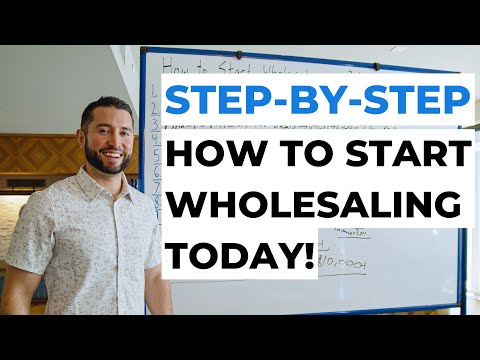
How To Wholesale Real Estate Step by Step (IN 21 DAYS OR LESS)!
Watch me walk through the complete wholesale process from first lead to collected fee — the same framework our students use to close their first deal, including how to find distressed properties, run the numbers, and get contracts accepted fast.

Step 2: Learn Massachusetts Real Estate Wholesaling Laws & Contracts
Wholesaling real estate is legal in Massachusetts. The big misconception, often from licensed agents, is that wholesaling real estate is illegal in the state. That is incorrect. What is illegal in Massachusetts is negotiating and completing real estate transactions for others while not licensed as a real estate broker or salesperson under M.G.L. c. 112 §87PP. When you sign a contract to purchase real estate, you are purchasing as a principal, not as a broker. As a principal, you have protection under M.G.L. c. 112 §87QQ — the principal exemption. This is the key to wholesaling real estate legally in Massachusetts. As long as you are negotiating and acting solely as a principal, you can look for other principals to assign your contract to.
The Principal Exemption — What It Actually Means
New Massachusetts real estate investors (and even some seasoned ones) mistakenly believe wholesaling is against the law in the Bay State. I have had licensed real estate agents explain to my students that in Massachusetts, wholesaling is not allowed because it is against the law and subject to substantial penalties. Actually, what those licensed real estate agents have been trained to do is the activity that requires a license. Wholesaling in Massachusetts is not against the law and is done by many, many, many (hopefully smart) investors. But there is a very critical distinction that must be understood by anyone planning to wholesale in this state.
The Board of Registration of Real Estate Brokers and Salespersons enforces the license requirement in Massachusetts. The principal exemption under §87QQ is what keeps you on the right side of that enforcement.
Sign contracts in your own name or in the name of your LLC. Never mislead anyone into believing you are signing on behalf of another party. You are a principal — not a broker. That is what makes this work legally in Massachusetts.
Massachusetts Is An Attorney-Close State — Here's What That Means Operationally
Every residential real estate closing involving a lender in Massachusetts requires a licensed Massachusetts real estate attorney. This is not optional and is different from escrow states, where a title company escrow officer manages the closing process. In Massachusetts, the closing attorney manages the closing, and all documents are delivered to the attorney's office for signing. Funds (including the wholesaler's assignment fee) flow through the attorney's IOLTA trust account.
These attorneys can be a nuisance, but operationally, they are an integral part of the wholesaling process, especially in terms of submitting your assignment for acceptance and the transactional funding on a double close. When you close a deal, you submit the assignment to the closing attorney's office rather than a title company's escrow officer. The funds, including your assignment fee, are disbursed through the closing attorney's IOLTA (Interest on Lawyers Trust Accounts) trust account.
This is a great benefit for the virtual wholesaler as all deal paperwork is typically handled by the closing attorney. You do not need to be physically present for the closing. Get a list of investor-friendly attorneys before your first deal. Your mentor or other investors may be able to recommend attorneys they have used. Listing agents will also have attorney relationships and can point you in the right direction. Find your attorney before you find your first deal.
Contracts In Massachusetts
The typical contract used for wholesaling in Massachusetts is the Massachusetts Standard Residential Purchase and Sale Agreement. This agreement does not contain a non-assignment clause (unlike California's CAR RPA) and therefore any terms regarding assignability are included in the purchase and sale agreement itself. Have a Massachusetts real estate attorney review your contract template before your first deal. Typically, this takes about 30 minutes and will give you written documentation of their review. This is probably the least expensive form of insurance you will ever purchase — and it gives you peace of mind as well as protection against any potential legal liability from a contract that may be in violation of Massachusetts laws or regulations.
An assignment of contract form is required for wholesaling in Massachusetts. This form transfers your rights under a purchase and sale agreement to a cash buyer at closing. Download our attorney-drafted wholesale contract templates to use as your starting point.
📌 Before You Write Your First Offer In Massachusetts
- Confirm your assignment language: Your purchase and sale agreement must include clear language permitting assignment. Have a Massachusetts real estate attorney review it before use.
- Identify your closing attorney: Find an investor-friendly Massachusetts real estate attorney before you need one. Ask your mentor or your agent network for a referral.
- Understand the IOLTA process: Your assignment fee and all transaction funds flow through the closing attorney's IOLTA trust account — not a title company.
- Know the advertising line: When marketing deals under contract, you're selling your contractual interest — not the property. "Assignable purchase contract available" is correct. "Property for sale" is not. This is the 254 CMR 2.00 compliance line that trips up most beginners.
- Earnest money range: In Massachusetts, $500 to $2,000 is typical for wholesale deals. Always include a seven-day inspection contingency to keep your EMD refundable while you find your buyer.
For the complete legal framework — including the full §87PP/§87QQ analysis, what constitutes unlicensed brokerage in Massachusetts, and how to stay compliant — see our dedicated guide.

Step 3: Understand The Massachusetts Real Estate Market
Much is made of Boston's real estate market, but the city is really the worst place for a real estate wholesaler to get started in Massachusetts. Boston is a tough city to make money wholesaling real estate in. Much better is Worcester County, which has the highest concentration of foreclosures in the state of Massachusetts. Furthermore, the city of Worcester is forecast to be the third-best market for home sale growth in 2026 nationally. Then there is the lowest entry point of all the major metros in the state: Springfield is the perfect place to get started.
What Is The Best City To Wholesale Real Estate In Massachusetts?
While every headline about real estate in Massachusetts is about Boston, it's the wrong city for a beginner to start wholesaling. The city with the highest foreclosure concentration in Massachusetts is Worcester County. For all the new restaurants and bars, for all the new young professionals moving to the Canal District, the fact is, there are still a ton of distressed properties throughout the city. The neighborhood where you want to buy and wholesale is the one with the most distressed properties being sold at a low price by motivated sellers — and that would be Main South, where many of the older homes are being held by owners looking to exit. That's the type of distressed property a wholesaler would love to get their hands on and sell to a real estate investor for a nice profit.
Researching a market starts with the Massachusetts Association of Realtors, which has monthly reports for each county. It is best to review these reports before scouting neighborhoods. The information from RealtyTrac and ATTOM can be used to research the number of distressed properties currently available in Massachusetts. For the wholesaler, Worcester County's numbers are the most important — it has had the highest foreclosure concentration in the state, above the state average for the last several quarters.
The other market worth knowing is Springfield. The lower price points result in lower assignment fees in absolute terms. However, the strong margins on deals in Springfield create a very lucrative opportunity for the wholesaler. Add in the fact that there is thin competition for these deals, and the result is that a distressed 3-bedroom property that has been sitting for 80 days will likely receive only one investor call — and that will be you.
Other markets to look into are Lowell and Lawrence. Investor activity in Lowell has been growing due to strong demand and the commuter rail connection to Boston, with median home values ranging from $425,000 to $495,000. Lawrence runs competitively, but for the active wholesaler who has built a good rapport with listing agents, there are consistent deal sources to work from.
How To Research Your Massachusetts Target Market
The Massachusetts Association of Realtors at marealtor.com publishes monthly market data reports covering sales volume, days on market, and median prices by county. Pull these before you pick your target neighborhoods.
For researching distressed properties, RealtyTrac and ATTOM track foreclosure activity in Massachusetts on a county-by-county basis. The numbers for Worcester County are above the state average for several consecutive quarters — meaning a deeper and more consistent pipeline of motivated sellers than anywhere else in the state.
The Massachusetts government real estate atlas also gives you access to mapping, transaction history, and tax structures by municipality — useful for understanding price patterns in specific neighborhoods before you start making offers.
But the best way to do research is by physically touring the city or neighborhood and getting a good feel for the market. Drive around to see which areas have the most distressed properties and which are turning over. Get to know the local agents and the local area. If you do not know where to start, I recommend touring the Main South area of Worcester and the South End area of Springfield. Both of these areas are loaded with real estate opportunities that are waiting to be wholesaled.
| 📍 Market | Median Home Value (2026) | Typical Assignment Fee | Deal Potential | Competition Level |
|---|---|---|---|---|
| Greater Boston | $719,000–$1M+ (SFH) | $20,000–$40,000+ | ⭐⭐⭐⭐⭐ Very High ARV | 🔴 Very High |
| Worcester | ~$433,000–$450,000 | $12,000–$22,000 | ⭐⭐⭐⭐⭐ Best Deal Flow | 🟡 Moderate |
| Springfield | ~$265,000–$301,000 | $10,000–$18,000 | ⭐⭐⭐⭐ Good Margin/Deal | 🟢 Low–Moderate |
| Lowell | ~$425,000–$495,000 | $12,000–$20,000 | ⭐⭐⭐⭐ Growing Market | 🟡 Moderate–High |
| Lawrence | ~$500,000 | $14,000–$22,000 | ⭐⭐⭐⭐ Active Investor Market | 🔴 High |
Median values sourced from Zillow and Redfin (2026). Assignment fee ranges reflect typical wholesale spreads on distressed properties in each market. Competition levels reflect active investor density. Worcester County foreclosure data per RealtyTrac (current).

Step 4: Build A Cash Buyers List
A lot of new wholesalers in Massachusetts try to find the deal first and build the buyer's list later. Here's why that approach fails: you put a distressed Worcester 3/2 under contract with a 14-day close and a 7-day inspection contingency, and then you spend 10 of those 14 days trying to find someone to assign it to. Build the list first. Know who's buying, where they're buying, and what they'll pay before you make your first offer.
How Do I Find Cash Buyers In Massachusetts?
Cash buyers in Massachusetts are fix-and-flippers, landlords, and institutional investors who purchase properties without financing. The ones you want are the ones closing multiple deals per month — not someone who buys twice a year. Here's where to find them in Massachusetts specifically:
- Massachusetts REI meetings: Worcester and Springfield both have active Real Estate Investor Association chapters. Show up, introduce yourself as someone who finds discounted deals, and ask investors what they're currently buying. You don't need a pitch. You need to listen and take notes on their buying criteria.
- The Google Ninja trick: Type "sell my house fast Worcester" or "we buy houses Springfield" into Google. The investors showing up in organic results are spending money on marketing because they want deals. They're real buyers. Click organic results only — not the ads.
- Craigslist: Search your Massachusetts city for "we buy houses" or "sell my house fast cash." Investors advertising here are actively looking for deals right now.
- Public records: Pull Worcester County deed transfers from the last 12 months. Look for buyers who purchased multiple properties, bought with no mortgage (all-cash), and resold within a year. Those are your fix-and-flippers. Their contact information is public record.
- Agent networks: The listing agents you build relationships with through your discovery calls often know active investors in the market. Ask them directly — "Do you work with any cash investors who are buying in this area?"
When you find a potential buyer, get their buying criteria before you start bringing them deals. What neighborhoods do they target? What's their price range? What's their dollar-per-square-foot repair estimate? How fast can they close? That information is what lets you bring them deals that actually fit instead of wasting their time and burning the relationship.
What A Quality Massachusetts Cash Buyer Actually Looks Like
Here's a real example of the buyer type you're trying to find. Daniel is a Real Estate Skills student who has been fixing and flipping in Massachusetts since 2012, with close to 100 transactions over that span. He works with 10 agents across the state, attends local REI meetups, and is always looking for his next deal. Earlier this year, he closed on a distressed 4-bedroom, 2-bath in Auburn (Worcester County) that a wholesaling company brought him. He acquired it for $425,000, held it for under six months, and sold it for $605,000. His buyer pool is real, his criteria are specific, and he's actively buying right now.
There are hundreds of investors like Daniel operating in Massachusetts. Your job is to find three to five of them before you find your first deal. Three quality Worcester or Springfield fix-and-flippers who close on distressed 3/2s and can give you their buying criteria are worth more than fifty generic names on a spreadsheet.
Don't Burn Your Leads. Know Exactly What To Say.
Finding cash buyers in Worcester and Springfield is only half the battle; you still have to win their trust. Massachusetts fix-and-flippers like Daniel have seen every kind of wholesaler walk through the door. One wrong word signals amateur, and serious investors move on fast. Download our battle-tested Cash Buyer Script to sound like a seasoned pro from the very first call, uncover their exact buying criteria for this market, and lock down relationships that will keep paying you for years.


Step 5: Find Motivated Sellers & Distressed Properties
The MLS is where the vast majority of all real estate in Massachusetts gets done: 86% to 92% of all real estate transactions in Massachusetts take place on the Multiple Listing Service. But every beginner to the business says the same thing: "The deals are all off-market." This is simply not true. In the two biggest markets in the state (Worcester and Springfield), every single day, listing agents put up on the MLS properties they are representing that are in distress and need to be sold fast to a cash buyer. You do not need direct mail, bandit signs, or cold calling to find distressed properties in the Massachusetts real estate market. All you need to do is learn how to find the listings on the MLS that are going to make you money and then call the listing agents to make them an offer.
How Do I Find Motivated Sellers In Massachusetts?
Massachusetts had approximately 3,094 properties in foreclosure as of mid-2026 per RealtyTrac. Some 613 properties were scheduled for auction and 117 were already bank-owned. Numbers like these translate into motivated sellers, each listed by a listing agent who would welcome the opportunity of working with a serious cash investor to sell the property quickly. Many of these properties are located in Worcester County.
Here are the MLS strategies that produce consistent deal flow in Massachusetts:
- The Day Zero Strategy: In real estate terms, when a property first hits the market this is known as the Day Zero or launch date. I have my team pull new listings every day for all the cities we are working in. Typically, there are around 30 to 50 listings that hit the market daily for counties like Worcester or Springfield. I sort the listings by date and filter them by time on the market, then use the descriptions to identify distressed listings. These properties may have very poor photos, an out-of-date interior, or listings that explicitly state they are looking for a cash buyer only or are being sold as-is. When I'm looking for a distressed listing to assign, I search for terms like: hoarder, cash only, as-is, investor special, fixer-upper, needs TLC, fire damage, estate sale, probate. If I find a listing with a distressed seller, I add it to my CRM and call the listing agent that same day. Many times, I'm the only investor calling that day. Speed is the entire point — in Worcester, being the first investor to call a listing agent on a new distressed property frequently means being the only one who calls that day. I've gotten deals under contract the same day I found the listing using this strategy.
- The Old Listings Strategy: In Massachusetts, when a property is on the market for 60 days or more, it generally means something is wrong; perhaps the home has been overpriced, or it has had condition issues. As time passes, sellers become more and more motivated. At the beginning of 2026, the Massachusetts median days on market rose to 31 days. These old listings are candidates for serious negotiations with motivated sellers.
- Keyword Searches: By using keywords within the MLS listing description search, you can find distressed listings that are certain to go to a cash buyer. Keywords to search for in Massachusetts: hoarder, cash only, as-is, investor special, fixer-upper, needs TLC, fire damage, estate sale, probate.
- Price Reductions: About 18.5% of active listings nationwide had price reductions in Q2 2026. With every price reduction, the seller is coming down to reality and getting more motivated to sell. Search for recent price reductions in your target zip codes and add them to your daily call list.
- The Coming Soon Filter: Many MLS systems have a filter to view listings that are pre-market — Coming Soon. Investors rarely check these because most don't know about them. I've had students close deals from these listings with as much as $50,000 to $100,000 in assignment fees because they were the only investors who called.
Work with an investor-friendly agent in your target area to gain access to MLS listings. Redfin, Zillow, and Realtor.com provide free access. The MLS itself contains a wealth of information, including confidential remarks that often include the seller's motivation directly. An MLS assistant account can also be obtained in most Massachusetts counties for quarterly fees that typically run $75 to $300.
How To Talk To Massachusetts Listing Agents
When I am working with a new student, I see this mistake frequently: they send the agent a text message or use software to blast a form offer. Listing agents are busy, and most of the experienced agents I work with in Massachusetts work with other investors regularly. If an agent receives a form offer from an unknown person, it gets deleted immediately. This is why a phone call is far superior to a text or form offer.
Call before you analyze. There is nothing worse than spending hours analyzing a property and then finding out that afternoon that the listing agent had already received another offer and the property went pending. Avoid this — make your calls first, then do your analysis, then call back with an offer you are sure you can close on.
On the first call (the discovery call), your goals are to confirm the property is truly distressed, understand the seller's situation and motivation, find out what competition is on the deal, and start building rapport with the agent. Don't make an offer on this call. Tell them you're going to review the numbers with your team and call back with a real offer you can stick to. Then do exactly that.
The largest incentive for a listing agent to work with you as buyer's representative is that they earn double the commission compared to what they'd earn if you brought in a separate buyer's agent. They would get both the listing side and the buyer's side. If the total commission on a $335,000 purchase is 5%, that's $16,750 total — and the listing agent keeps all of it when they represent you as the buyer. Your offer becomes more attractive than a competing offer at the same price from a buyer with a separate buyer's agent. About 80% of the time in my experience, the listing agent agrees to represent you as buyer's representative.
The Massachusetts Advertising Compliance Line
If you get a property under contract, you will need to market it to find a buyer. But if you start advertising a property before you have acquired it you are engaged in unlicensed real property activity under 254 CMR 2.00(9) — the province of the Board of Registration of Real Estate Brokers and Salespersons.
Posting a 3-bed house for sale in Worcester for $320,000 on Facebook Marketplace or Craigslist before you own the property is advertising real property without a license under 254 CMR 2.00(9). The Board of Registration has enforcement interest in this type of advertising.
The correct framing: "Assignable purchase contract available — 3-bed Worcester property, $335,000." You're marketing your contractual right to purchase, not the property itself. That distinction is everything. Get it right from your first deal.
Master the MLS Discovery Call: Talk to Agents Like a Pro
Massachusetts listing agents (especially in Worcester and Springfield) are experienced, professional, and deal with investor calls regularly. The ones who call back, get the information they need, and get their offers accepted aren't guessing what to say. They're using a proven script. This free discovery call script gives you the exact questions to ask to extract seller motivation, qualify distressed leads, and present yourself as a serious principal buyer from the very first call — not as a wholesaler fishing for deals.

Step 6: Put Distressed Properties Under Contract
Once you've identified the right distressed property and had a solid discovery call with the listing agent, it's time to analyze the deal and make your offer. The instinct for most beginners is to lowball as aggressively as possible. In Worcester's market right now, where deal flow is active but buyer competition exists, that approach gets your offer ignored. Run your numbers accurately, make an offer you can defend, and present it professionally — that's what gets deals under contract.
How Do I Analyze A Wholesale Deal In Massachusetts?
The analysis comes down to three numbers. After Repair Value (ARV), repair costs, and your offer price. Get these right and everything else follows. Get one wrong and you either lose the deal or lose money on it.
After Repair Value (ARV) is what the property will be worth once your cash buyer renovates it. To find it, pull sold comparables from the last six months within a half-mile radius — same bed and bath count, similar square footage, same city and zip code, renovated condition. Compare apples to apples. A 3-bed, 2-bath, 1,200 square foot comparable should be compared against other 3-bed, 2-bath properties in similar condition — not a duplex, not a condo, not a property two miles away in a different neighborhood. You can pull comps through the MLS, Redfin, or Zillow. Always cross-check with Google Maps — look at each comp's neighborhood to make sure you're actually comparing the same type of location.
Repair costs come from your cash buyers. Ask your Worcester and Springfield buyers what their dollar-per-square-foot renovation rate is for a cosmetic fixer. Most Massachusetts fix-and-flippers are working at $35 to $45 per square foot for a standard cosmetic renovation. Multiply that by the property's square footage and you have a working repair estimate. For a 1,200 square foot property at $40 per square foot, that's $48,000. You don't need to be exact — you need to be within $3,000 to $5,000. The only person who knows the exact number is the contractor your buyer uses.
On bigger issues — cracked slabs, roof replacements, foundation work, electrical rewiring — flag them specifically when you talk to the listing agent. These are the things that move your repair estimate significantly and affect whether a deal works. Ask the agent directly: "Is there anything structural, foundational, or electrical I should know about?"
Your offer price is calculated using the MAO formula. Here's how it works in Massachusetts with real numbers:
One thing worth knowing about Massachusetts's price points specifically: a 5 percent error in your ARV estimate on a $450,000 Worcester property is a $22,500 swing. That can eliminate your entire assignment fee and leave your buyer underwater. Run your comps conservatively. Pull three to five sold comps, not one. If your comparables are all pointing to $440,000 to $460,000, use $440,000 as your ARV — not $460,000. The conservative number protects everyone in the deal.
The 70 percent rule is a starting point. Some Massachusetts cash buyers will stretch to 75 or 80 percent on the right deal — usually higher-value Boston-area properties with strong ARVs and predictable repair scopes. Ask your buyers what their actual threshold is. When you know that number, you can reverse-engineer your maximum offer price precisely instead of guessing.
How Do I Put A Distressed Property Under Contract In Massachusetts?
After your discovery call, you analyzed the numbers. You know your ARV, your repair estimate, and your maximum offer price. Now you make the close call — the second call to the same agent where you present your offer.
Keep it clean. Tell the agent you met with your team, reviewed the numbers on the renovation and the comps, and you can come in at your offer price, all cash, with a seven-day inspection and a 14-day close. Then go silent. Let them respond. Don't backtrack, don't immediately soften the number, don't offer to come up before they've even responded. A confident offer backed by real analysis is what agents in this market want to work with.
Send your offer terms via email immediately after the call — property address, your entity name or personal name as purchaser, offer price, earnest money deposit amount, closing timeframe, inspection contingency, and a note that the seller delivers free and clear title. Include your proof of funds. If you've already built your buyers list, you can use your cash buyer's proof of funds letter — ask them for first right of refusal on the deal in exchange. That makes your offer look institutional from day one, which matters in Massachusetts's market where attorneys and experienced agents can spot an amateur offer immediately.
Earnest money in Massachusetts wholesale deals typically runs $500 to $2,000. It's due within 72 hours of contract acceptance. Always include a seven-day inspection contingency — this is your protection window to wholesale the deal before your EMD becomes at risk. The closing attorney handles the EMD receipt and confirmation. Your goal is to have the deal assigned to your cash buyer well before that inspection window closes.
How To Fill Out Wholesale Real Estate Contracts (FREE DOWNLOAD)!
Ryan Zomorodi, COO of Real Estate Skills, walks through exactly how to fill out wholesale real estate contracts from start to finish — covering the purchase and sale agreement, assignment contract, what every clause means, and what to have your Massachusetts closing attorney review before you use them.

Secure Your Deal With Bulletproof Contracts
Massachusetts is an attorney-close state. Every deal you put under contract will be reviewed by a licensed closing attorney before it closes. That means your paperwork needs to be airtight before it reaches that table. Download our attorney-drafted Wholesale Real Estate Contracts — including the Massachusetts-compatible Purchase & Sale Agreement and Assignment Contract — so you show up to your first closing with documents that are clean, assignable, and ready for the attorney to work with.


Step 7: Assign The Contract To Cash Buyer
Once you've got a signed purchase and sale agreement, your job is to deliver that deal to your cash buyers on a platinum platter — everything they need to make a fast decision in one clean email. The buyers who are already in your network, who know your name, and who have told you exactly what they're looking for in Worcester or Springfield are the ones who respond within 24 hours. That's why Step 4 comes before Step 7.
How Do I Assign A Contract To A Cash Buyer In Massachusetts?
The moment your purchase and sale agreement is fully executed — signed by both you and the seller — send your deal to your top three to five cash buyers. Your email should include the three numbers they need to make a decision: your contract price, your estimated ARV, and your estimated repair costs. Add the property address, photos, showing instructions, comparable sales, your assignment fee, and contract deadlines. That's it. A cash buyer who knows what they're doing can look at those numbers in 30 seconds and tell you yes or no.
Most wholesalers have no idea what to put in this email and end up sending a vague message that forces the buyer to ask six follow-up questions. Those deals die in the inbox. The platinum platter approach — all the information your buyer needs, delivered clean — is what gets you a same-day response from the right buyer.
Once your buyer commits, execute the assignment of contract — the document that transfers your rights under the purchase and sale agreement to your buyer for your specified fee. Collect a non-refundable earnest money deposit from the buyer at this stage to lock in their commitment. This deposit confirms they're serious and protects you if they back out after you've already passed on other potential buyers.
Your assignment contract goes to the closing attorney along with the original purchase and sale agreement. The attorney reviews both documents, confirms the assignment is properly structured, and prepares the closing documents from there. This is different from escrow states where a title company officer handles this step — in Massachusetts, it's the attorney's process from here to close.
Can You Wholesale Massachusetts Real Estate Virtually?
Yes, and Massachusetts's attorney-close requirement actually makes this easier in some ways, not harder. Because the closing attorney centralizes all the paperwork and manages the fund transfers through their IOLTA trust account, you don't need to be physically present at closing. Everything can be handled remotely through your attorney and e-signature platforms like DocuSign.
The challenges for virtual wholesaling in Massachusetts are the same as anywhere: building a local buyers list without physically attending REI meetings, and evaluating properties without walking the streets. For property evaluation, use Google Street View for an exterior read, then coordinate with a local contact — your agent, a contractor, or a property manager in your target market — to do a video walkthrough. For buyers, the Google Ninja trick and Craigslist searches work just as well remotely as they do locally.
One thing that doesn't change because you're working remotely: the 254 CMR 2.00 advertising compliance line. "Assignable purchase contract available" — not "property for sale." That language applies whether you're marketing the deal from Worcester or from across the country.

Step 8: Close Deal And Collect Assignment Fee
This is my favorite step — it's where you get paid. As the wholesaler in Massachusetts, you will rely on the closing attorney to close the transaction on your behalf. It is crucial that you maintain communication with the attorney's office throughout the process and remain on top of your cash buyer to confirm they are proceeding as planned. The last thing you want is to have a contract in place only to have the deal fall apart because you were not managing the buyer.
How Does Closing Work For Wholesalers In Massachusetts?
The attorney in Massachusetts can be thought of as the title company, but they are a licensed Massachusetts real estate attorney. Your job as the wholesaler is to find the motivated seller and negotiate the purchase and sale agreement. Once that is completed, all funds — including your assignment fee — flow through the attorney's IOLTA (Interest On Lawyers Trust Account) trust account. The attorney prepares the settlement statement, disburses the funds, and collects funds via wire transfer to close the deal.
Contact the attorney's office as soon as you receive notice that a deal has been assigned to them for closing and introduce yourself. Find out what documents they need and send them the required purchase and sale agreement, the assignment contract, and the buyer's written confirmation of the earnest money deposit. In most cases, the closing attorney will require these three documents to prepare for closing. Send them early — deals fall apart at the closing table when documents are incomplete or arrive late.
Stay on your cash buyer as well. Ask them directly: Have you accessed the property? Has your contractor walked it? Are you clear on the closing date? The ABFU principle — Always Be Following Up — is what separates wholesalers who close from wholesalers who lose deals in the final stretch. I have students who allow deals to fall apart in the last 72 hours because they simply assumed the buyer was moving forward. Don't assume. Follow up.
How Long Does A Wholesale Deal Take In Massachusetts?
In general, clean assignments in Worcester or Springfield take approximately 21 to 35 days from initial contact with the seller. Assignments in the Boston area may take a bit longer — approximately 30 to 45 days — due in large part to the pace of the local market as well as attorney scheduling. Double closings add no less than three to five days to the total time of the deal, as two sequential attorney closings must occur. Deals involving probate, liens, or title complications can take 60 days or more.
| Phase | Days | What Happens | What Can Go Wrong |
|---|---|---|---|
| Find & Analyze | Days 1–7 | Identify distressed listing on MLS, discovery call with listing agent, run ARV comps and repair estimate, calculate MAO | Analyzing before calling — property goes pending while you're running numbers |
| Negotiate & Sign | Days 7–10 | Close call with agent, present offer price, send offer terms email with proof of funds, P&S executed by both parties | Offer not competitive — another investor's offer accepted; use backup offer position |
| EMD Due | Day 10–13 | Earnest money deposit ($500–$2,000) submitted to closing attorney within 72 hours of contract acceptance | Missing the EMD deadline — puts contract at risk |
| Market To Buyers | Days 10–17 | Send platinum platter email to top 3–5 buyers, field interest, schedule property access for contractor walkthrough | No buyers respond — buyers list was not built before finding the deal |
| Assign Contract | Days 17–21 | Execute assignment contract with buyer, collect non-refundable EMD from buyer, submit assignment to closing attorney | Assignment contract not reviewed by MA attorney — language issues discovered at closing |
| Attorney Close | Days 21–35 | Closing attorney coordinates all documents, settlement statement, and fund transfers through IOLTA trust account. Buyer pays seller, you collect assignment fee. | Title complications, probate issues, or lien clearance extending timeline to 45–60 days |
| 🏁 Average Total Time: 25–35 Days | Average Assignment Fee: $12,000–$22,000 (Worcester/Springfield) | $20,000–$40,000+ (Boston area) | ||
Timeline assumes a clean assignment of contract. Double closings add 3–5 days minimum. Probate, lien, or title complications can extend to 45–60 days. Always include a 7-day inspection contingency and a 14-day close target in your offer terms.

Step 9: Double Close Or Wholetail When Necessary
Assignment of contract is how we close the vast majority of wholesale deals — it's simpler, cheaper, and faster. But there are situations where assignment doesn't work: the seller objects to it, your profit margin is large enough that disclosure could jeopardize the deal, or your buyer's funding source requires them on title. In those cases, a double close or wholetail is the right structure. Massachusetts's attorney-close framework actually makes both of these easier to execute cleanly.
When Should I Double Close Instead Of Assign In Massachusetts?
A double close means you purchase the property from the seller (the A-to-B transaction) and immediately sell it to your end buyer (the B-to-C transaction). Both closings are coordinated through a licensed Massachusetts closing attorney. Your profit — the spread between what you paid the seller and what your buyer paid you — never needs to be disclosed to either party.
Use a double close when:
- The seller has language in the purchase and sale agreement restricting assignment
- Your assignment fee is large enough that disclosure to the seller would cause them to renegotiate or pull out
- Your buyer's hard money or private lender requires them to be on title from day one
- The deal involves an REO or bank-owned property where the seller's addenda prohibit assignment
The A-to-B close requires funding — you need money to buy the property from the seller before you collect from your buyer. In Massachusetts, transactional funding solves this. A transactional lender provides short-term funds — usually for 24 to 72 hours — specifically for back-to-back wholesale closings. In Massachusetts, those funds flow through the closing attorney's IOLTA trust account for the A-to-B transaction. The attorney manages the timing of both closings. This is different from escrow states where a title company manages simultaneous closings — in Massachusetts, the attorney is running both transactions sequentially, and the timing coordination is their job. Find a transactional lender before you need one and confirm they are familiar with Massachusetts attorney-close double close mechanics.
Double closings add costs — two sets of attorney fees and closing costs instead of one. Factor that into your fee calculation before you decide this is the right structure.
Wholetailing In Massachusetts
Wholetailing is worth understanding in the Massachusetts context specifically. Instead of assigning your contract right away, you take ownership of the property, do light but high-ROI renovation work — fresh paint, clean carpets, basic landscaping — and list the property on the MLS to sell to a broader buyer pool.
Why does this work particularly well in Massachusetts? Two reasons. First, inventory across the state is persistently tight. A lightly updated property in a Worcester or Springfield neighborhood that's improving can attract retail buyers with conventional financing — not just cash investors. A retail buyer can often pay 10 to 15 percent more than your typical fix-and-flipper because they're buying a home, not calculating a flip profit. Second, the attorney-close process that feels like a complication for beginners is actually familiar infrastructure for the retail buyers you're selling to. Everyone in Massachusetts expects an attorney at closing. There's no friction.
The tradeoff with wholetailing is time and capital. You're taking ownership, which means holding costs, renovation costs, and closing costs on both ends. Run the numbers against a straight assignment before you commit to this approach. On the right deal — a Worcester property with strong fundamentals that needs $15,000 in cosmetic work to get to retail — wholetailing can add $30,000 to $50,000 to your profit versus a straight assignment. On the wrong deal, it eats your margin and ties up your capital for three months.
Is Wholesaling Real Estate Legal In Massachusetts?
Wholesaling real estate in Massachusetts is legal. When you sign as a buyer in a purchase contract, you are acting as a principal in the transaction and fall under the principal exemption at M.G.L. c. 112 §87QQ — which protects you from the license requirement established under M.G.L. c. 112 §87PP. The main point of this exemption is that no license is required as long as the individual is acting for themselves and not negotiating on behalf of another person. For the complete legal framework including the full §87PP/§87QQ analysis and how to stay compliant, see our dedicated guide.
So long as you are correctly marketing your contractual interest rather than the property itself, you will be compliant with all requirements as a wholesaler. There are, unfortunately, many wholesalers who incorrectly advertise properties for sale before they have a contract on a property, usually on Facebook Marketplace or Craigslist. In these instances, they are advertising real property without a license under 254 CMR 2.00 — a matter that the Board of Registration of Real Estate Brokers and Salespersons would look to enforce.
How Much Do Real Estate Wholesalers Make In Massachusetts?
Assignment fees in Massachusetts typically run $10,000 to $40,000 per deal depending on market tier — meaningfully above the national average because Massachusetts home values are among the highest in the country. Worcester and Springfield deals generally land between $10,000 and $22,000. Boston-area deals with the right distressed inventory can push $30,000 to $40,000 or more. What you actually make depends on deal volume, market selection, and how well you run the numbers.
There is no fixed amount that wholesalers make. A wholesaler's salary depends on the type of properties you find, the depth of your buyers list, and how consistently you're submitting offers. The investors who make the most in Massachusetts aren't the ones chasing the biggest Boston deals — they're the ones closing volume in Worcester and Springfield at $12,000 to $18,000 per deal, month after month.
The numbers I hear on YouTube — $30,000 on your first deal — are real but they're not the median. Here's what most first deals in Massachusetts actually look like for someone starting in Worcester or Springfield: a $10,000 to $15,000 assignment fee, a 25 to 35 day timeline, and a process that was harder than expected but worked because they followed the steps. That's a legitimate starting point. From there, deal volume is what drives income.
Here's how the numbers scale at Massachusetts's typical fee ranges:
| Deal Volume | Avg Fee (Worcester/Springfield) | Monthly Income | Annual Income |
|---|---|---|---|
| 1 deal/month | $14,000 | $14,000 | $168,000 |
| 2 deals/month | $14,000 | $28,000 | $336,000 |
| 3 deals/month | $14,000 | $42,000 | $504,000 |
| 1 deal/month (Boston tier) | $28,000 | $28,000 | $336,000 |
Income projections based on Massachusetts market assignment fee ranges. Worcester/Springfield average fee reflects current distressed market pricing. Boston-tier fee reflects experienced operator results on high-value distressed inventory. Results vary based on deal selection, buyers list depth, and offer volume.
To get to one deal per month consistently, you need to be submitting roughly 15 written offers per month — about one every other day. That's not guesswork, it's math. Track your offers. If you know you submitted 15 offers and got one deal, you also know that the other 14 are still alive. Deals fall out. Backup offers get called. The investors who follow up consistently are the ones who capture those second chances.
Do You Need A License To Wholesale Real Estate In Massachusetts?
No license is required to wholesale real estate in Massachusetts as long as you're acting as a principal — signing contracts as the buyer for yourself, not negotiating on behalf of another person. The principal exemption under M.G.L. c. 112 §87QQ is what draws the line. For the full statute analysis and what specific activities trigger the license requirement, see our legal guide.
That said, some wholesalers in Massachusetts choose to get licensed — and there are real advantages. A licensed agent has direct MLS access, can write their own offers without going through a listing agent, earns commissions on deals they facilitate as an agent, and has access to the full suite of Massachusetts Association of Realtors contracts and forms. If you're planning to scale significantly in this state, a license is worth considering as a long-term business decision — not a compliance requirement.
The coursework to get licensed in Massachusetts is 40 classroom hours for a salesperson license. It won't teach you how to wholesale — that's a different skill set — but the MLS access and network it unlocks are genuinely useful as your business grows.
Can A Realtor Wholesale Property In Massachusetts?
Yes — a licensed real estate agent or broker can wholesale property in Massachusetts, provided they disclose their license status to the seller when making an offer. A licensed wholesaler is acting as a principal buyer in the transaction, but their license status creates a disclosure obligation that an unlicensed investor doesn't have.
Licensed agents who wholesale in Massachusetts have a real competitive advantage on the deal-finding side. Direct MLS access means no dependency on a buyer's agent. The ability to write their own purchase and sale agreements saves time and removes a middleman. And the professional credibility that comes with a license often makes listing agents more receptive to calls and offers — especially in the Boston suburbs where agent relationships drive deal flow.
The disclosure requirement is what most agents overlook. Under Massachusetts law, a licensed agent making an offer to purchase property must disclose to the seller that they hold a real estate license. That disclosure needs to happen before the contract is signed. Failing to disclose as a licensee creates civil liability and potential Board of Registration discipline — consequences that don't apply to unlicensed principals operating correctly under §87QQ.
Wholesaling as a skill set also gives licensed agents something most of their peers don't have: the ability to make direct cash offers to sellers who need a fast, certain close. Very few agents know how to do this. The ones who do are able to serve a category of homeowner that a traditional listing agent simply can't help.
Is Wholesaling In Massachusetts Easy?
No — but it's not hard for the reasons most beginners think. The investors who struggle in Massachusetts are usually struggling because they're focused on the wrong market, not because the process doesn't work here. Boston is genuinely competitive. Worcester and Springfield are not. If you start in the right market, follow the process consistently, and submit offers rather than just analyzing, Massachusetts is a very workable state for a beginning wholesaler.
The specific challenges in Massachusetts are worth naming honestly. The attorney-close process adds a coordination step that doesn't exist in escrow states — you need a closing attorney in your network before you find your first deal, not after. The compliance line around advertising is real and specific — the 254 CMR 2.00 distinction between marketing a property and marketing your contractual interest is where most Massachusetts investor problems start. And the price points mean that ARV errors are expensive — a bad comp in Worcester costs you significantly more than a bad comp in a $180,000 median market.
None of these are barriers. They're just things you need to know before your first offer. The investors who walk in with a mentor, a closing attorney lined up, and a buyers list already built have a dramatically smoother first deal than the ones who try to figure it out in real time on a live contract.
With the right training and mentorship, you can become a top performer in Massachusetts markets. The Pro Wholesaler VIP Program is designed for exactly this — it's 100% online, covers both local and virtual wholesaling, and includes unlimited deal reviews so you're never analyzing a Massachusetts deal alone.
Massachusetts Wholesaling Expenses
The great news about wholesaling in Massachusetts is that startup costs are genuinely low — especially if you're doing assignment of contract deals. You're not buying the property. Your main out-of-pocket cost before closing is an earnest money deposit of $500 to $2,000. Marketing costs are minimal if you're working the MLS. The biggest variable is whether you're doing a straight assignment or a double close — the latter requires transactional funding and two sets of attorney fees.
| Expense | Typical Range (Massachusetts) | Notes |
|---|---|---|
| Earnest Money Deposit | $500–$2,000 | Refundable within inspection contingency. Your goal is to wholesale the deal before this window closes. |
| Marketing (MLS-based) | $0–$300/year | MLS assistant access in Massachusetts typically runs $75/quarter. Redfin and Zillow are free alternatives. |
| Attorney Contract Review | $150–$400 | One-time review of your purchase and sale agreement and assignment contract template before your first deal. Cheapest insurance you'll buy. |
| Closing Attorney Fee (assignment) | $800–$1,500 | Paid by the buyer in most Massachusetts assignments. Confirm this with your closing attorney before your first deal. |
| Transactional Funding (double close) | 1%–3% of A-to-B purchase price | Only required for double closes. On a $300,000 A-to-B transaction, expect $3,000–$9,000 in transactional funding fees. |
| Closing Costs (double close) | Two sets of attorney fees | Double closings require two attorney closings in Massachusetts. Factor in $1,600–$3,000 in total attorney fees for both transactions. |
| LLC Formation (recommended) | $500–$520 | Massachusetts LLC filing fee is $500. Annual report fee is $520. Not required for your first deal but recommended before you scale. |
| Direct Mail / Paid Marketing | $0 (MLS approach) | Using the MLS-based system, you spend nothing on lead generation. Direct mail campaigns, if you choose to add them later, typically run $300–$600 per 1,000 pieces. |
All cost ranges reflect current Massachusetts market conditions. Closing attorney fees vary by firm and transaction complexity. Confirm all fee structures with your closing attorney before your first deal.
Total estimated startup cost for a Massachusetts wholesale assignment: $650 to $2,700 before your first fee hits. For a double close, add $4,600 to $12,000 depending on purchase price and transactional funding rate. The assignment model is the right starting point for beginners — low capital requirement, fast execution, and no ownership risk.
Wholesaling Real Estate In Massachusetts: Pros & Cons
Wholesaling in Massachusetts has real advantages — high home values mean above-average assignment fees, the attorney-close process provides professional structure that experienced buyers expect, and the distressed inventory in Worcester and Springfield creates consistent deal flow for operators who know where to look. The challenges are specific and manageable. Here's an honest breakdown.
| ✅ Pros | ⚠️ Cons & How To Handle Them |
|---|---|
| Above-average assignment fees. Massachusetts's $661,755 statewide median means your fee as a percentage of the spread is higher in dollar terms than in most states. | Attorney-close coordination required. Every closing needs a licensed MA attorney. Build that relationship before your first deal, not during it. |
| Low startup cost. A clean assignment deal requires only a $500–$2,000 EMD. No marketing spend required using the MLS approach. | Thin buyer pool outside Boston. Worcester and Springfield buyer pools are smaller than coastal markets. Three quality buyers beats 50 generic contacts — build your list carefully. |
| Worcester and Springfield are underworked. Competition drops dramatically 45 minutes west of Boston. Beginners can be the first investor to call on distressed listings in Worcester County. | High price points compress MAO math. A 5% ARV error on a $450,000 property costs you $22,500. Run comps conservatively. Pull three to five comparables, not one. |
| Active distressed inventory. 3,094 properties in foreclosure statewide, 468 in Worcester County alone. The pipeline of motivated sellers is real and replenishing. | Advertising compliance line is specific. "Property for sale" before you own it violates 254 CMR 2.00. "Assignable purchase contract available" is correct. Know this before your first deal. |
| Attorney-close as professional advantage. Cash buyers in Massachusetts expect an attorney at closing. Showing up with clean documents and a professional process builds credibility fast. | Boston is the wrong starting market. High competition, high price points, deep operator networks. Build your skills in Worcester or Springfield first. |
| Wholetailing works here. Tight statewide inventory means lightly updated properties attract retail buyers willing to pay above what a cash investor would offer. | Deals take longer than escrow states. Attorney scheduling and sequential closing process means Massachusetts deals average 25–35 days vs. 21 days in some escrow states. |
Frequently Asked Questions
Here are the most common questions about wholesaling real estate in Massachusetts — focused on the process, the market, and what actually works here in 2026.
Final Thoughts
Massachusetts is not as difficult to invest in real estate as it has been portrayed by many investors. Most investors give Massachusetts a pass because they look at the Boston median home price and assume that is the entire state. However, the true opportunity in Massachusetts is in the 45 minutes west of Boston in the cities of Worcester and Springfield. In these two cities, you will find a large amount of distressed inventory that is actively listed, relatively low levels of competition, and highly motivated sellers.
There are specific challenges that an investor in Massachusetts must recognize, and prepare for. The process of working with an attorney to close a deal is far different from a typical escrow closing. The investor must account for the high price points in Massachusetts, thereby needing to be highly detailed in their calculations to arrive at a successful deal. Finally, there are rules as to how a home can be advertised for sale, and these need to be recognized by the wholesaler prior to the wholesaling of a home. None of these issues present insurmountable obstacles for an investor with experience in other states, but rather present another opportunity for that experienced investor to prosper in a new and challenging market.
Opportunity abounds in Massachusetts. Worcester County has the largest pipeline of distressed inventory for sale in the state. In a state known for high home values, here assignment fees pay above the national average. A fix-and-flipper buying a distressed Worcester 3/2 at $340,000 for example has ample room to get paid well and hit their expected profit numbers. It can happen. You just have to be the willing investor who showed up, crunched the numbers correctly, called the listing agent first and then followed up on the property when others quit looking.
To make starting to do real estate investing in Massachusetts as easy as possible for the new real estate investor, the #1 piece of advice for a new real estate investor is to pick a market to do your investing in before you start to analyze potential deals. Boston is not the market to start your real estate investing career in Massachusetts. The big city has too many established real estate investors, many with long term relationships with local real estate agents, for a new real estate investor to start out in. You should instead focus your real estate investing in the two largest cities in Massachusetts outside of Boston: Worcester and Springfield. This is because both cities have a deep pool of potential distressed properties to consider for fix and flip investing and both cities have enough activity to make it easy to find motivated sellers. The other major advantage of real estate investing in Worcester and Springfield is that there is not as much competition from other fix and flip style real estate investors as there is in Boston.
Now that you've learned how to wholesale real estate in Massachusetts, what are you waiting for? Go get it done.
You Know The Massachusetts Market. Now Build The Deal System That Works In It.
You've read every step. You know Worcester is the starting point. You understand the attorney-close process and the compliance line. The next move is executing the first deal — and our free training walks you through exactly how our students find motivated sellers in Massachusetts markets, run the MAO formula on real distressed properties, and get contracts accepted without spending a dollar on marketing.
This is the same MLS-based system that helped one of our students close 13 deals in 11 months, averaging $14,000 per deal, working part-time. Watch it this week and submit your first offer before the weekend.
Watch the FREE TrainingFree. No credit card. Watch it today.

About the Author
Alex Martinez
Founder & CEO, Real Estate Skills
Alex Martinez is a full-time real estate investor, educator, and the Founder & CEO of Real Estate Skills. Over his career, he has personally acquired more than 33 residential investment properties, generated over $12 million in revenue, and co-led firms responsible for more than $15 million in total real estate sales. Since 2020, he has built Real Estate Skills into one of the leading educational platforms for new and experienced investors alike. He also serves as a mentor at the Lavin Entrepreneurship Center at San Diego State University, where he coaches undergraduate students in real-world business strategy.
*Disclosure: Real Estate Skills is not a law firm, and the information contained here does not constitute legal advice. You should consult with an attorney before making any legal conclusions. The information presented here is educational in nature. All investments involve risks, and the past performance of an investment, industry, sector, and/or market does not guarantee future returns or results. Investors are responsible for any investment decision they make. Such decisions should be based on an evaluation of their financial situation, investment objectives, risk tolerance, and liquidity needs.

👉FREE Training
How To Consistently Wholesale, Flip Houses, & Invest In Rental Properties From The MLS
(Without Spending $1 On Marketing)

Alex Martinez, the founder of Real Estate Skills, is known for his strong, practical expertise in real estate, starting from a beginner with no family connections in the industry to completing over 50 real estate deals, including wholesale and flips, within his first year.
He has dedicated his career to providing cutting-edge education and resources for real estate professionals. He emphasizes the importance of self-taught knowledge through mentors, books, and hands-on experience.
His journey from earning a modest income to becoming a successful real estate entrepreneur and educator showcases his expertise and dedication to the field.

Ryan Zomorodi, co-founder and COO of Real Estate Skills, leverages his experience from a diverse background in real estate investment, construction management, and entrepreneurship to provide comprehensive education in the real estate sector.
His expertise is rooted in hands-on experience, extensive industry knowledge, and a commitment to empowering others through education.
Ryan's journey reflects a blend of practical experience and entrepreneurial success, contributing to his role in developing a platform that educates and supports aspiring real estate professionals.
Read Ryan's Full Bio >>
