
Vrbo vs. Airbnb: Which Is Better For Owners In 2026?
Aug 31, 2026

Written by
Alex Martinez — Founder & CEO, Real Estate Skills. Has wholesaled and flipped houses for over 14 years, been part of 1,000+ real estate transactions, and personally acquired 33+ residential investment properties. Has trained 6,000+ investors nationwide.
Reviewed by
Ryan Zomorodi — Co-Founder & COO, Real Estate Skills. Verified the platform fee structures, net-payout figures, and rental economics in this guide before publication.
Publication history: Originally published January 30, 2024. Updated August 2026 with corrected 2026 fee structures for both platforms, a worked net-payout comparison, a new platform-selection framework for property owners, cross-listing guidance, and a rebuilt FAQ. Verified by Ryan Zomorodi, Co-Founder & COO of Real Estate Skills.
Vrbo vs. Airbnb comes down to what you own. Vrbo lists entire homes only, and its guests are families and groups booking longer stays. Airbnb takes anything — rooms, apartments, whole houses — and reaches far more travelers. Airbnb has roughly 9 million listings worldwide; Vrbo has around 2 million.
Most people comparing Vrbo and Airbnb are asking the wrong question first. They want to know which platform is better. The better question is which platform wants the property you actually own — because on that question, the two are not competing for the same thing at all.
Here's the split that decides it for a lot of owners before anything else matters. Vrbo takes entire homes. Only entire homes. If you're renting a spare bedroom, a basement unit, or half a duplex while you live in the other half, Vrbo isn't an option and the comparison ends there. Airbnb takes all of it. And most of Vrbo's inventory sits in vacation country — roughly 41% of its listings are rural and about a third are in beach or lake destinations. A downtown condo is technically eligible, but it's swimming upstream.
This guide walks the decision the way an investor should: what each platform costs you per booking and what your guest actually pays, which property types perform on each, whether listing on both is worth it, and the question most comparisons skip entirely — whether your property should be a short-term rental in the first place. Every fee figure below was verified against Airbnb's and Vrbo's own documentation, and it's dated, because these numbers move. You can also download our free rental property calculator and run your own numbers as you read.
What Is Vrbo?
Vrbo — short for Vacation Rentals By Owner — is a vacation rental platform launched in 1995, making it the oldest of its kind. It's owned by Expedia Group and lists entire homes only, with roughly 2 million listings worldwide concentrated in vacation destinations.
Vrbo started in 1995 when a Colorado condo owner built a website to rent out his own property without going through a management company. Other owners had the same problem, and the site grew from there. HomeAway acquired it in 2006, Expedia Group acquired HomeAway in 2015, and the brands merged under the Vrbo name in 2019.
That history explains what Vrbo is today. It was built by an owner, for owners renting whole properties — and it never expanded past that. No private rooms, no shared spaces. Entire homes, roughly 2 million of them across about 190 countries, with inventory concentrated in beach, lake, mountain, and rural destinations.
The Expedia connection matters more than most comparisons acknowledge. A Vrbo listing distributes across Expedia's network rather than living only on Vrbo, which means one listing reaching several booking channels.
What Is Airbnb?
Airbnb is the largest short-term rental marketplace, founded in 2008 and headquartered in San Francisco. It lists roughly 9 million properties worldwide — everything from shared rooms to entire homes — and takes an estimated 55% to 60% of U.S. short-term rental booking volume.
Airbnb began in 2008 when two San Francisco designers rented air mattresses in their apartment to travelers who couldn't find hotel rooms during a conference. Air Bed and Breakfast became Airbnb, and it grew into the largest platform of its kind.
The defining difference from Vrbo is breadth. Airbnb accepts private rooms, shared spaces, entire homes, apartments, and unconventional properties — roughly 9 million listings, spanning cities as heavily as vacation destinations. Its urban presence is the part that matters most for owners: a downtown condo or an apartment near a convention center is Airbnb inventory in a way it isn't Vrbo inventory.
One correction worth making, because it's still repeated across the internet: Airbnb Plus no longer exists. Airbnb discontinued the program in November 2023. Listings are now recognized through Superhost status and Guest Favorites badges instead.
Are Vrbo And Airbnb The Same Company?
No. They're separate companies and direct competitors. Vrbo is owned by Expedia Group, which acquired it as part of HomeAway in 2015. Airbnb is an independent public company founded in 2008. Separate listings, separate accounts, separate fees, separate support.
This question comes up constantly, and the confusion is understandable — the two platforms look similar and often show the same kinds of properties. They have no corporate relationship at all.
What that means in practice: a listing on one does not appear on the other. Your Airbnb reviews don't transfer to Vrbo, your Superhost status means nothing there, and a guest with an Airbnb account has to create a separate Vrbo account to book. Two businesses, two systems, two sets of rules.
Some properties do appear on both. That's because the owner listed them twice, deliberately — which is a real strategy with real tradeoffs, covered further down.
Vrbo vs. Airbnb: Key Differences At A Glance
The core differences: Vrbo accepts entire homes only and charges hosts about 8% per booking. Airbnb accepts every property type and charges most hosts on the single-fee structure 15.5%. Vrbo draws families booking longer vacation stays; Airbnb draws shorter, more frequent bookings across far more markets.
Here's how the two platforms compare on everything that matters to a property owner.
| Vrbo | Airbnb | |
|---|---|---|
| Property types | Entire homes only | Rooms, shared spaces, entire homes |
| Listings | ~2 million | ~9 million |
| U.S. booking volume | ~20–25% | ~55–60% |
| Owner | Expedia Group | Independent public company |
| Launched | 1995 | 2008 |
| Host fee | ~8% (5% commission + 3% processing) | 15.5% single fee, or 3% on split fee |
| Guest fee | Separate fee at checkout, rate not published | None on single fee; 14.1–16.5% on split fee |
| Typical guest | Families and groups | Solo travelers, couples, business travelers |
| Typical stay | Longer — week-long vacations | Shorter — weekends, work trips |
| Where inventory sits | ~41% rural, ~1/3 beach or lake | Cities and vacation markets both |
| Damage protection | Refundable damage deposit | AirCover: up to $3M damage, $1M liability |
| Host recognition | Premier Host | Superhost + Guest Favorites |
| Distribution | Vrbo + Expedia network | Airbnb only |
Most of these differences trace back to one decision Vrbo made and never reversed: entire homes only. That single rule shapes who lists there, who books there, and what a property has to be for Vrbo to make sense. The rest of this guide works through what those differences mean for your bottom line.
Vrbo vs. Airbnb Fees: What Each Platform Actually Costs
Vrbo hosts pay about 8% per booking — a 5% commission plus 3% payment processing. Most Airbnb hosts on the single-fee structure pay 15.5%. But Airbnb absorbs the guest fee into that rate, while Vrbo adds a separate fee the traveler sees at checkout.
Fees are where most people get confused about these two platforms, and the confusion is understandable, because the answer flips depending on who you are.
Ask a host which platform is cheaper and they'll say Vrbo. Ask a guest and they'll often say Airbnb. Both are right. The platforms split the same total roughly the same way — they just take it from different pockets.
How Airbnb Charges
Airbnb runs two fee structures.
The split fee divides the cost. Most hosts pay 3% (4% in Brazil and Mexico), deducted automatically from the total price. Guests pay 14.1% to 16.5% of the booking subtotal, with the top of that range applying to bookings where the guest pays in a different currency than the host set.
The single fee puts the whole thing on the host. Most hosts pay 15.5%, the rest typically 14–16%, and 16% in Brazil and Mexico. The guest pays no separate service fee.
Here's the part that matters for anyone running this as a business: the single fee isn't always a choice. Airbnb requires it for traditional hospitality listings like hotels and serviced apartments, for hosts in certain countries, and — this is the one that catches investors — for any host using property management software. Airbnb has also said the split fee will stop being available to certain hosts, who will migrate to the single fee whether they wanted to or not.
So if you're a single-property owner managing bookings by hand, you're probably paying 3% and your guest is paying the rest. The moment you add software to manage multiple listings, your rate jumps to 15.5%. That's a real cost of scaling that almost nobody mentions.
How Vrbo Charges
Vrbo's host side is simpler. Pay-per-booking runs a 5% commission on the rental amount — including mandatory fees you charge, like cleaning and pet fees, but excluding taxes and refundable deposits — plus a 3% payment processing fee on the total you collect. Call it 8%.
There's also an annual subscription that eliminates the 5% commission. Do not plan around it. Vrbo has closed it to new hosts; only existing subscribers can renew. Reported pricing runs $499 to $699 per listing per year. If you're reading this deciding where to list a new property, that option isn't on the table for you.
On the guest side, Vrbo charges a service fee as a percentage of the reservation total before taxes and refundable fees. Vrbo doesn't publish a fixed percentage — it says the rate varies by reservation amount — and reported ranges cluster around 6% to 15%. Vrbo does display the full price including required fees up front, so travelers see the total before checkout rather than at it.
💡 The Same Booking, Both Platforms
A $250/night listing, 3 nights, $150 cleaning fee. Rental subtotal: $900.
On Vrbo (pay-per-booking):
- 5% commission on $900 → $45
- 3% processing on the guest's payment → roughly $32 on a ~$1,050 total
- You net about $823 of the $900
On Airbnb (single fee, 15.5%):
- 15.5% of $900 → $139.50
- You net about $760
The difference: roughly $63 on one booking — about 7% of the subtotal. Across 40 bookings a year, that's around $2,500.
Now flip to the guest. On Airbnb's single fee, the traveler pays $900 plus taxes — no service fee on top. On Vrbo, the traveler pays $900 plus a service fee that could add $54 to $135 before taxes. Same booking. Host does better on Vrbo. Guest sees a lower number on Airbnb. That's the whole answer to "which one is cheaper," and it's why you'll find people insisting on both.
Figures verified against Airbnb's and Vrbo's published fee documentation as of 2026. Rates vary by market, listing type, and how you connect to each platform — confirm your own rate in your host dashboard before you price anything. Outcomes vary.
The practical read for an owner: Vrbo keeps more money in your pocket per booking. Airbnb shows your guest a cleaner price. Which matters more depends on whether your problem is margin or occupancy. If your listing sits in a competitive market and you're fighting to fill nights, the price a traveler sees at checkout is doing real work. If you're booked most of the season anyway, the 7% spread is the more valuable thing.
And if you're planning to list on both and run software to keep the calendars synced — the standard setup once you own more than one property — price the 15.5% in from the start. That's covered below.
The Platform Is The Easy Part. Finding The Property Is Where Investors Get Stuck.
Fee structures and listing rules only matter once you own something worth listing. The investors who actually build rental income start upstream — finding properties below market value, running the numbers before they buy, and knowing which deals are worth chasing. Our FREE Training walks you through the entire system, the same one thousands of our students use to find and close their first deals. Watch it today, then go find something worth putting on either platform.
Watch The FREE Training →Vrbo vs. Airbnb For Owners: Which Should You List On?
List on Vrbo if you own an entire home in a vacation destination and want families booking longer stays. List on Airbnb if you own anything else — a condo, a city apartment, a spare room, or a property that depends on weeknight and solo travelers. Vrbo rejects partial-property listings outright.
Start here, because it eliminates half the decision immediately: Vrbo only accepts entire-home listings. Not a room in your house. Not a converted basement while you live upstairs. Not one side of a duplex you're occupying. The whole property, or nothing.
If that describes what you own, you're on Airbnb. The comparison is over. Everything else in this article is context.
If you do own a full property, the question becomes a real one, and it comes down to three things: where the property is, who it sleeps, and how long people stay.
Where The Property Is
Vrbo's inventory is concentrated in vacation country — roughly 41% of its listings are rural, and about a third sit in beach or lake destinations. That's not an accident of history; it reflects who searches there. Someone opening Vrbo is usually planning a trip to somewhere, not a night in a city. A mountain cabin, a lake house, a beach condo — Vrbo's audience is already looking for those.
Airbnb goes everywhere, and it owns the urban market outright. A downtown loft, an apartment near a convention center, a place two blocks from a stadium — that's Airbnb inventory. You can list a city property on Vrbo. You'll just be one of relatively few, competing for a much smaller pool of travelers who came looking for a lake house. If you're weighing a smaller urban unit, it's worth understanding whether condos make a good investment before you commit to either platform.
Who It Sleeps
This is the one that surprises people. A four-bedroom house with a pool and a big kitchen table is a Vrbo property even if it's in a city, because Vrbo's guests are families and groups traveling together, and they're specifically looking for space. A studio is an Airbnb property even if it's on a beach, because Vrbo's audience isn't shopping for studios.
Match the property to the traveler, not to the platform's brand.
How Long People Stay
Vrbo guests book longer. Week-long family vacations, holiday stays, the kind of trip planned three months out. Airbnb runs shorter and more frequent — two nights, a weekend, a work trip. That difference matters more than it looks. Longer stays mean fewer turnovers, fewer cleanings, and fewer chances for something to go wrong. Shorter stays mean more nights filled in markets without a clear vacation season.
If your property only makes money three months a year, Airbnb's shorter-stay traffic may be what keeps it occupied the other nine.
| If your property is… | Start with |
|---|---|
| A room, a shared space, or part of a home you live in | Airbnb (Vrbo won't list it) |
| An entire home in a beach, lake, or mountain destination | Vrbo |
| A city apartment or condo | Airbnb |
| A large home that sleeps 8+ anywhere | Vrbo |
| A studio or one-bedroom | Airbnb |
| Near a convention center, stadium, or business district | Airbnb |
| A seasonal property that's dead nine months a year | Airbnb, for the shorter-stay traffic |
| Booked solid in season with a big spread to protect | Vrbo, for the better net payout |
Reach vs. Fit
One more thing worth weighing. Airbnb is substantially bigger in the U.S. market — roughly 55% to 60% of short-term rental booking volume against Vrbo's approximately 20% to 25%. Globally the gap is wider still: Skift Research puts Airbnb at about 44% of the worldwide short-term rental market as of 2024, up from 28% in 2019, while Vrbo's global share slipped from 11% to around 9% over the same stretch.
Bigger sounds better, and for reach it is. But it cuts both ways: on Airbnb you're one of nine million. On Vrbo you're one of two million, and if your property is the kind Vrbo's guests are actively hunting for, a smaller pond with the right fish in it can outperform.
Vrbo also has a distribution advantage most comparisons skip. It's an Expedia Group company, and Vrbo listings surface across the Expedia network rather than only on Vrbo itself. One listing, several booking channels.
Figures reflect reported 2026 market data; short-term rental market share shifts, so treat these as directional rather than precise. Results vary by market and property.
The honest answer for most owners with a full property: start with the platform your property was built for, prove it works, then consider adding the other one. Listing on both from day one sounds like free reach. It has costs that aren't obvious — including one that can raise your Airbnb fee rate by twelve points. That's next.
Before You Pick A Platform: Is A Short-Term Rental Even Right For This Property?
Short-term rentals typically generate more revenue than long-term tenants, but they operate as a business rather than a passive investment. Expect turnovers, guest messaging, seasonal vacancy, platform commissions of 8–15.5%, and management fees well above the 8–10% a long-term rental costs. The revenue is higher. So is the work.
Most people comparing Vrbo and Airbnb have skipped a question worth two minutes.
Ryan Zomorodi, co-founder of Real Estate Skills, has built a rental portfolio worth over $10 million, almost entirely long-term buy-and-hold. His read on short-term rentals is direct: the revenue can be higher, but you're renting nightly, and that means it's really running a business — not the mostly-passive investment a long-term rental becomes once it's set up.
That's the tradeoff in one sentence, and it's worth sitting with before you spend a weekend photographing a property for a platform.
What A Long-Term Rental Actually Costs To Run
Ryan's numbers from his own portfolio: property management runs about 8% to 10% of gross rent collected. Vacancy gets budgeted around 8% — roughly one month a year. Maintenance, 5% to 10% depending on the property's age. On one of his single-family rentals near Nashville, a $417,000 purchase renting at $3,300 a month, the whole expense stack — mortgage, taxes, insurance, maintenance, HOA, management, vacancy — came to about $2,742, leaving roughly $558 a month in cash flow.
Tenant signs a twelve-month lease. Pays on the first. You look at it occasionally.
What Changes With Nightly Rentals
Every one of those expense lines moves, and none of them move in your favor:
- Platform commission. A long-term rental has none. A short-term rental gives up 8% on Vrbo or 15.5% on Airbnb's single fee, off the top of every booking.
- Occupancy replaces vacancy. An 8% vacancy assumption means one empty month. Short-term rentals don't work that way — you're filling a calendar night by night, and the number that matters is what percentage of nights actually book.
- Turnovers. Cleaning between every stay, not between every tenant. A guest staying three nights generates the same turnover work as one staying a year.
- Management costs more. The 8–10% Ryan pays on long-term properties doesn't buy short-term management. Coordinating cleanings, handling guest messaging, and adjusting pricing is a different job, and it's priced like one. If you're weighing that decision, our guide to hiring a property management company walks through what to look for.
- Furnishing and restocking. Long-term tenants bring their own furniture. Short-term guests expect yours, plus linens, kitchen supplies, and consumables you replace continuously.
- Seasonality. A lake house may earn most of its year in twelve weeks.
None of that means don't do it. Short-term rentals genuinely can out-earn a long-term tenant on the same property, sometimes substantially. But the gap between gross revenue and what you keep is much wider than it is with a lease, and the time cost is real.
The Honest Test
Three questions worth answering before you list anywhere:
- Would this property cash flow as a long-term rental? If yes, you have a safety net — a bad season means you sign a tenant instead of eating losses. If no, and short-term is the only way the numbers work, you're taking on a business with no fallback.
- Do you want a job or an asset? Not a rhetorical question. Some people enjoy hospitality. If turnovers, messaging, and reviews sound like a hobby you'd like, short-term is a great fit. If it sounds like a second shift, that instinct is information.
- Is it legal where the property is, and will it stay legal? Cities restrict short-term rentals constantly — permit caps, minimum-stay rules, outright bans in some neighborhoods. Check your local rules and your HOA before you buy or convert. A long-term rental almost never gets legislated out of existence. A short-term rental can.
This is educational information, not financial or investment advice. Rental returns vary widely by market, property, and management approach, and past results don't predict future outcomes. Consult a licensed professional before making an investment decision.
Run Your Own Numbers Before You Pick A Platform
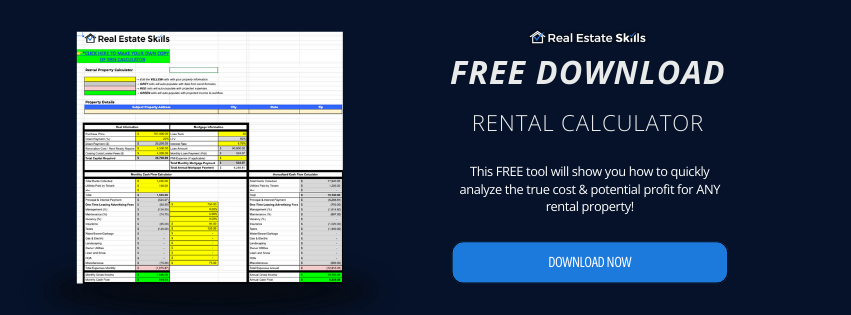
Short-term rental math looks nothing like long-term rental math. Platform commission takes 8% to 15.5% off every booking, occupancy replaces vacancy, and you're paying for a cleaning between every stay instead of between every tenant. Before you commit a property to nightly rentals, model it both ways. Download the same professional-grade calculator we use to analyze cash flow, expenses, and cash-on-cash return — then run your property as a long-term rental and see what a short-term operation actually has to beat.
If you've worked through that and short-term still wins — good. That's the right way to arrive at it. Head back up to the platform decision and pick based on the property. And if you decide you want to run it on Airbnb, we've got a full walkthrough of how to set up and run an Airbnb.
Can You List On Both Vrbo And Airbnb?
Yes. Neither platform requires exclusivity, and listing on both is standard for owners with more than one property. The catch: syncing calendars requires property management software, and using software makes Airbnb's 15.5% single fee mandatory — which can cost more than the extra bookings are worth.
Nothing stops you from listing the same property on both platforms. Plenty of owners do, and for a property with real seasonal swings it can be the difference between a full calendar and a half-empty one. Airbnb brings shorter, more frequent stays; Vrbo brings longer family bookings. Different traffic, same house.
But there's a cost nobody puts in the headline.
The Double-Booking Problem
Two platforms means two calendars. If someone books your property on Vrbo for the same weekend somebody else booked it on Airbnb, you're cancelling on a guest — which damages your standing on the platform you cancel on, and in peak season it's the kind of mistake that follows you through your reviews.
Managing two calendars by hand works until it doesn't. Most owners running both end up using property management software to sync availability automatically.
And That's The Trap
Airbnb's single-fee structure — the 15.5% one — is mandatory for hosts who use property management software. It isn't a setting you choose. Connect a channel manager, and you move from paying 3% with your guest covering the rest, to paying 15.5% yourself.
Run the arithmetic before you commit. On that same $900 booking from earlier: at 3%, Airbnb takes $27. At 15.5%, Airbnb takes $139.50. That's $112 per booking, on every Airbnb booking you take from then on.
So the real question isn't "should I list on both." It's whether the incremental Vrbo bookings clear what cross-listing costs you on the Airbnb side. If adding Vrbo brings you eight bookings a year and pushes your Airbnb rate up by twelve points across forty bookings, you've gone backwards. If your property sits empty half the season and Vrbo fills twenty nights, it's obviously worth it.
📍 When Cross-Listing Makes Sense
Do it when:
- Your property has a clear off-season and you need a second demand source
- You're in a vacation market where Vrbo's family traffic is genuinely different from your Airbnb guests
- You own multiple properties and are already paying for software regardless — the fee decision is already made
- You're on Airbnb's single fee anyway, so there's nothing left to lose
Skip it when:
- One property, managed by hand, currently on the split fee at 3%
- You're booked most of the season on one platform already
- A city property where Vrbo's audience isn't looking for you anyway
- You're new and still learning one platform's system
The one-property rule of thumb: if you're a single-property owner on Airbnb's split fee and your calendar is filling, adding Vrbo probably costs more than it earns. Prove one platform first.
Practical Notes
Vrbo also handles payment processing differently depending on how you connect. List directly on Vrbo and Vrbo processes guest payments. Connect through most property management systems and the software processes payments instead — which changes what you pay and who's responsible for the transaction. Confirm the arrangement with whatever software you're considering before you sign up.
And if you do run both, keep the listings genuinely consistent — same photos, same house rules, same minimum stay. Guests cross-shop, and a property that reads differently in two places looks like two different properties.
Fee structures and software requirements change. Verify current terms with each platform and your software provider before committing. Outcomes vary by property and market.
Property Damage Protection: AirCover vs. Vrbo's Damage Deposit
Airbnb's AirCover for Hosts reimburses hosts up to $3 million for guest-caused damage and includes $1 million in host liability insurance. Vrbo has no equivalent program — instead it lets hosts require a refundable damage deposit charged to the guest's card. Neither replaces real short-term rental insurance.
This is the clearest difference between the two platforms for an owner, and it favors Airbnb.
Airbnb's Approach Is A Program
AirCover for Hosts includes host damage protection that reimburses up to $3 million for damage caused by guests or their invitees — the property itself, furnishings, belongings, even parked vehicles. It covers extra cleaning for stains, pet accidents, and smoke odor removal, and it reimburses lost income if you have to cancel confirmed bookings because of guest damage. AirCover also bundles $1 million in host liability insurance, guest identity verification, reservation screening, and a 24-hour safety line.
The process matters as much as the number. You document the damage, then file a reimbursement request in Airbnb's Resolution Center within 14 days of the guest's checkout. The guest gets 24 hours to respond. If they decline, don't respond, or pay only part, Airbnb reviews the request.
What it doesn't cover: normal wear and tear, lost cash, acts of nature like earthquakes and hurricanes, and routine checkout cleaning. Airbnb is also explicit that host damage protection is not insurance.
Vrbo's Approach Is A Deposit
No platform-backed damage program. Instead you can require a refundable damage deposit, charged to the guest's card if damage occurs, with claims filed within 14 days of checkout. No damage, full refund.
What This Means For You
Airbnb's coverage ceiling is dramatically higher, and that's a genuine advantage. But "not insurance" is doing real work in that sentence — it's a reimbursement program with exclusions and a review process, not a policy you can rely on. If you're renting a property nightly, carry actual short-term rental insurance regardless of which platform you're on.
Coverage terms, limits, and exclusions change. Verify current terms with each platform, and consult a licensed insurance professional about coverage for your property.
Cancellation Policies
Both platforms let hosts choose from tiered cancellation policies ranging from flexible to strict, with stricter policies protecting more of your revenue when guests cancel. Vrbo also allows fully custom policies. On Airbnb, some of the strictest options come with a higher service fee.
Cancellation policy is one of the few settings that directly trades occupancy for revenue protection, and both platforms handle it similarly.
Airbnb offers flexible, moderate, and strict tiers, plus long-term stay policies. Guests either cancel free or forfeit a portion depending on timing. Airbnb also offers stricter host-side options that guarantee partial payment even on a late cancellation — but hosts choosing the most restrictive policies can pay a higher service fee.
Vrbo runs comparable tiers — relaxed, moderate, firm, and strict — and adds one thing Airbnb doesn't: a fully custom option where you write your own rules.
The owner read: stricter policies protect revenue and cost you bookings. Guests filter on flexibility, especially for trips booked far out. In a competitive market, a strict policy can quietly reduce how often you appear in results a traveler actually considers. Newer hosts are usually better off starting more flexible and tightening once demand is proven.
Both platforms revise cancellation structures periodically. Confirm current options in your host dashboard.
Reviews, Superhost & Guest Favorites
Both platforms use two-way reviews with a blind window so neither party sees the other's before posting. Airbnb rates specific categories like cleanliness and check-in; Vrbo uses an overall rating. Airbnb awards Superhost status and Guest Favorites badges; Vrbo awards Premier Host.
Airbnb gives guests and hosts a 14-day window to review, published after both submit or the window closes. Guests rate specific dimensions — cleanliness, accuracy, check-in, communication, location, value — which means your weak spot is visible rather than buried in an average.
Airbnb runs two recognition systems. Superhost rates the host account on ratings, response rate, and reliability. Guest Favorites badges individual listings based on guest ratings, replacing the retired Airbnb Plus program. A host can be a Superhost with a listing that isn't a Guest Favorite, and vice versa.
Vrbo gives up to a year after checkout to review, with a 14-day response window before publication. Ratings are overall rather than categorized, and traveler ratings aren't publicly displayed. Premier Host is Vrbo's equivalent recognition, improving search visibility.
The owner read: Airbnb's category ratings are more diagnostic — you learn exactly what's costing you. Vrbo's year-long review window means feedback trickles in long after a stay, which makes it harder to correct a problem quickly.
The Booking Process
Both work the same way: a guest selects dates, sends a request, and the host approves or declines within 24 hours. Both offer instant booking, which confirms automatically without host approval. Instant booking improves visibility on both platforms.
There's no meaningful difference here for guests, and only one thing worth knowing as an owner.
A guest picks dates and guest count and requests the booking. You get a notification and can approve or decline, typically within 24 hours. Both platforms also offer instant booking, which confirms reservations automatically with no approval step.
Instant booking is the setting worth thinking about. It removes friction for travelers, and both platforms favor listings that use it. It also means you're accepting guests without reviewing them first. Most established hosts turn it on because the visibility is worth more than the screening. Newer hosts sometimes keep approval on until they're comfortable.
Vrbo vs. Airbnb FAQs
Final Thoughts: Vrbo Or Airbnb?
If you own a spare room, half a duplex, or anything that isn't a whole property, this was decided before you started reading. Vrbo won't list it. You're on Airbnb.
If you own an entire home, it comes down to whether your property is what Vrbo's guests are hunting for. A four-bedroom house near a lake, with room for a family and a week's worth of groceries — that's a Vrbo property, and you'll keep more per booking there. A one-bedroom in a city, filling weekends and work trips — that's Airbnb, and its reach is what keeps the calendar full.
The fee gap is real and it runs about seven points in Vrbo's favor. But it's smaller than the gap between a booked calendar and an empty one. Reach first, margin second, until reach stops being your problem.
And the thing worth repeating: the platform is the smallest decision here. Whether the property should be a short-term rental at all, whether it would still cash flow with a long-term tenant if the season goes badly, whether your city will still allow nightly rentals in three years — those decide whether this works. The platform just decides who finds you.
Pick the one your property was built for. Prove it. Then consider the other. If you're still early in the process, start with getting started as a real estate investor.
Pick The Right Property First. The Platform Decision Gets Easy After That.
Short-term or long-term, Vrbo or Airbnb — none of it works if you overpay for the property. The investors who build real rental income learn to find discounted deals, analyze them properly, and buy right before they ever think about listings and fees. Our FREE Training shows you exactly how, step by step, with the same process thousands of our students use. Watch it today, then go put it to work.
Watch The FREE Training →
About The Author
Founder & CEO, Real Estate Skills
Alex Martinez is the Founder and CEO of Real Estate Skills. He has wholesaled and flipped houses for over 14 years, been part of 1,000+ real estate transactions, and personally acquired 33+ residential investment properties. Through Real Estate Skills, Alex and his team have trained 6,000+ investors nationwide on how to find deals, analyze them properly, and build lasting rental income.
Real Estate Skills is not a law firm or a financial advisory firm, and the information in this article is provided for educational purposes only — it does not constitute legal, tax, or financial advice. Short-term rental laws, permit requirements, and platform fee structures vary by market and change over time. Real estate investing carries risk, and past results do not guarantee future outcomes. Always consult a licensed real estate attorney, tax professional, and insurance advisor before purchasing a property or listing it on any platform.

👉FREE Training
How To Consistently Wholesale, Flip Houses, & Invest In Rental Properties From The MLS
(Without Spending $1 On Marketing)

Alex Martinez, the founder of Real Estate Skills, is known for his strong, practical expertise in real estate, starting from a beginner with no family connections in the industry to completing over 50 real estate deals, including wholesale and flips, within his first year.
He has dedicated his career to providing cutting-edge education and resources for real estate professionals. He emphasizes the importance of self-taught knowledge through mentors, books, and hands-on experience.
His journey from earning a modest income to becoming a successful real estate entrepreneur and educator showcases his expertise and dedication to the field.

Ryan Zomorodi, co-founder and COO of Real Estate Skills, leverages his experience from a diverse background in real estate investment, construction management, and entrepreneurship to provide comprehensive education in the real estate sector.
His expertise is rooted in hands-on experience, extensive industry knowledge, and a commitment to empowering others through education.
Ryan's journey reflects a blend of practical experience and entrepreneurial success, contributing to his role in developing a platform that educates and supports aspiring real estate professionals.
Read Ryan's Full Bio >>
